Showing posts with label Botanicals. Show all posts

Friday, March 9, 2012

Kyphi (Kapet)

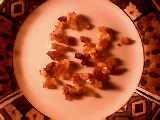
Daily in Ancient Egyptian ritual, Kyphi was and remains a dedicant to the Goddess Aset (Isis) where frankincense was burned during the morning, myrrh during the day, and Kapet (Kyphi from the Greek translation) during the evening. Depending upon the recipe, Kyphi is primarily a blend of myrrh, frankincense, copal, and benzoin. This blend smells wonderful; it helps create a very rich and mystickal atmosphere during ritual for me. You can make your own blends in oil, resin, and paste forms to be used as incense during Moon rituals, spellcasting, divination, prayer, and aromatherapy.

Kyphi in oil form can be used to increase circulation, relieve tension, and stress. As a side note, Queen Hatshepsut (c. 1472–58 BCE) formed expeditions to bring back processed myrrh and living myrrh trees to Egypt to adornthe foreground of her Dayr al-Bahrî temple (Hatshepsut Temple) in western Thebes. Many ritual blend recipes can be found on the temple walls at Edfu and Philae to this day.

The three important ancient Kyphi blends are:

Dioscorides

Edfu

Galen

There are several excellent websites devoted to these blends and their history which anyone can research and find for more information.

______________________
Temple of Kemetic Wicca

Friday, December 25, 2009

Aromatherapy History

A Brief History of Aromatherapy from Around the Globe

If you mention aromatherapy to a majority of people they immediately think of it being just one of the many new fads that has come to light with the hope of promising relief and a miracle cure for all ills. However, this is far from true. Aromatherapy is no fad.

While aromatherapy can bring relief to a number of conditions and is one of the leading aids for helping with stress related disorders, it has been around for thousands of years. In fact, aromatherapy is actually one of the oldest kinds of holistic medicine used throughout the world. During the prehistoric times they did not’t have the resources that we have today, and there were very little sanitary measures and certainly no drug stores or doctors.

However, people still got sick and this meant they had to find resources of their own and rely on what they had in their surroundings. One of the ways by which they learned during these times were by watching animals; they learned that animals would eat certain herbs and plants while avoiding others.

This is how the basis of aromatherapy started. It was found that not only could the herbs and plants be eaten to relieve many ailments, but they also could be crushed and used as infusions and even their smell brought relief. This was the birth of aromatherapy.

Aromatherapy as we know it and practice it today was first given to us by the Egyptians. The Egyptians learned not only were the plants and herbs useful when crushed but also oils could be extracted. This oil was a more potent way of using the flowers and herbs for medicinal remedies.
While the Egyptians were developing their aromatherapy techniques, so were the Chinese. One of the earliest books on aromatherapy dates back to 2,700 BC and lists over 300 plants and herbs and their uses.

However, it was the Greeks who went on to discover that oils extracted from certain flowers were more useful for relaxation purposes while others for more medical reasons. It was the Greeks who also introduced the base of olive oil into which to put the extracted essence. The Romans quickly adopted this from the Greeks, and it was here that the aromatherapy baths were introduced; these baths were then followed by a hot oil massage.

The popularity of aromatics used for a wide range of ills increased, and this led to the importation of exotic spices, flowers, and oils from India, China, and Arabia.

When Europe descended into the dark ages, aromatherapy went with it, as anything that was not’t classed as traditional Western medicine was put into the “Witchcraft” bracket and those who practiced aromatherapy were branded as a witch. Aromatherapy resurfaced again during the Middle Ages when the bubonic plague was prevalent; it was found that the scent from burning cedar and pine would help to fumigate infected enclosures.

When European settlers came to America they were surprised to find that the Native Americans had been using aromatic oils for a long time for a wide variety of uses. Finally, around the 19th century, the value of aromatherapy was truly recognized and traditional medicine started taking aromatherapy seriously.

Today aromatherapy is available to be used in the home, and although a little knowledge and understanding of the herbs and their uses is needed, you don’t have to be an expert to be able to make the remedies for yourself.

Learn more about infusions and applying aromatherapy in our list of articles found here.

Thursday, April 9, 2009

Herbs: Goji Berries

Types of Goji Berries

Author: Charles Kassotis

There are more then 41 types of Goji berries all over the world. Most of these types are cultivated in the orient. The most famous and widely spread are Lyceum barbarum, Lyceum Chinese and Lyceum ferocissimum.

Lycii berry, otherwise known to Chinese herbalists as Chinese Wolfberry is a bright red, almost chewy berry with a taste very similar to Raisins. It has been used as a general nutrient tonic for many years and Chinese medicine refers to it as a cooling tonic.

It contains beta-sitosterol, Betaine, Beta-carotene, Niacin, Pyridoxine, and Ascorbic acid.

They come from the Solanaceae family which also includes the tomato, green pepper, eggplant and potato that most Americans are familiar with.

Lycium chinense is sometimes referred to as Chinese wolfberry, matrimony vine or Chinese boxthorn. It is very closely related to Lycium barbarum and mainly grows in the Hebei province of China.

Lycium barbarus grows in various regions of Asia such as Tibet and Inner Mongolia but it thrives in an area called the goji belt. There are several provinces of China and areas in Tibet where these vines grow in the wild. In these areas the Lycium barbarum goji berry is highly revered. Ningxia, China is found in this goji belt and is considered one of the finest places for the goji vines to grow.

In Ningxia the soil is usually alkaline and very fertile. The temperatures can get very cold and very hot. It is this type of soil and climate that grows the largest, plumpest, most beautiful goji berries. The fruits are a deep red color, contain few seeds and have an exquisitely sweet taste. (As a side note, it is the rich, fertile, yet harsh climate of Alaska that brings the highest antioxidant blueberries found in the US.

Studies done at New Brunswick Labs which extensively investigated blueberries grown in the US have shown a direct correlation between harsh climate and antioxidants in their fruit. It seems the plant, if it has all the nutrients it needs to be healthy, will actually make more substances to protect it from the harsh environment.)

The people of Ningxia are simply crazy about their goji berries, which have always grown wild on the hillsides and which they have been cultivating for more than 500 years.

In Ningxia, goji legends based on history and tradition abound. Years ago the residents of Nanqui, a town in the province of Ningxia, were bestowed with the title Long Life Village by the emperor because they had so many centurians (people over the age of 100) living in their village.

Another area which lays at the foot of the Tianshan mountains (a mountain range nearly equal to the Himalayan mountain peaks) called Xinjiang, where there is pure snow runoff and harsh temperatures similar to those in Ningxia, also has goji berries of similar quality to those found in Ningxia.

Of course the regions of Hebei, Gansu, Qinghai and Shanxi, also in the Chinese goji belt, respectfully disagree that either of these two provinces have berries that are any better than theirs.

All these provinces are located along mountain ranges in one particular area of China.Goji supremacy is also claimed by the Tibetans. There are also Inner Mongolians, Koreans, and Japanese who grow and harvest the highly revered goji berry.

Ningxia, China is legendary for amazingly healthy people. The Chinese national census recently reported that the number of Ningxia residents living more than 100 years exceeds the national average by an amazing 400%. Ningxia locals now admit their health secret lies in the locally grown goji berries - wolfberries.

Goji Berries - Wolfberries - are a Chinese national treasure. The good health and vitality of the Ningxia elderly has long been attributed to goji berries - wolfberries. To the people of the province, a bowl of fresh goji berries - wolfberries - a day is part of life. Its health benefits have been extolled for generations. In fact even today, the Ningxia goji berry - wolfberry - is considered a national treasure.

In ancient times, the Chinese people were said to have three cherished tonics for health. They were ginseng, ling tzi, and goji berries - wolfberries.

According to ancient Chinese texts, goji berries - wolfberries:

Nourish the yin

Support the blood

Help support the kidneys and liver

Strengthen the eyes

Fortify the muscles and bones

Enhance the chi or life force

The people who consumed this fruit apparently lived free of common diseases like arthritis, cancer and diabetes. Moreover, their life expectancies reached over 100 years.

Both the wolfberry and ginseng have been highly regarded for centuries as the foremost nutritional and therapeutic plants in China. In fact, the Chinese hold a strong belief that human life might be extended significantly by using either of these herbs for an extended period of time.
The Chinese Wolfberry contained over 18 amino acids (that is six times higher in proportion than bee pollen), 21 trace minerals, more beta carotene than carrots, and an astonishing 500 times more vitamin C by weight than oranges. It is also packed with vitamin B1, vitamin B6 and vitamin E.

Fruits and pedicels of Chinese Wolfberry were effective in increasing white blood cells, protecting the liver and relieving hypertension. The alcoholic extract of wolfberry fruits inhibited tumor growth in mice by 58%, and the protein of wolfberry displayed an insulin-like action that was effective in promoting fat decomposition and reducing blood sugar.

About the Author:

There are over 41 types of wolfberries, but the himalayan goji berry in the most nutritionally dense; visit Goji Berry Guide Why Himalayan Goji Berries
Himalayan Goji Juice really works; Find details at
Goji Berry Guide Why Himalayan Goji Juice Works

Article Source: http://www.articlesbase.com/non-fiction-articles/types-of-goji-berries-93019.html

Tuesday, December 16, 2008

Herbs: Cassia and Cinnamon

Cassia and Cinnamon - Some Differences

Cassia or Cassia Bark (Cinnamomum aromaticum, synonym C. cassia) is often substituted for Cinnamon (Cinnamomum zeylanicum and C. Verum) because it is much cheaper to cultivate and is a close relative to cinnamon. Cassia is primarily native to Southern China, Bangladesh, India, and Vietnam. Korintje Indonesian cassia (Cinnamomum burmanni) or Padang cassia is primarily what is imported to North America.

Cinnamon originally hailed from Southern Asia and the West Indies, dates back as far as circa 2700 BCE. This aromatic herb (spice) was grown and used by the early Chinese and Ayurvedic healers as a treatment for fever, diarrhea, digestion, pain, and dental (tooth and gum) ailments, and more. It has been used as an antiseptic to help kill certain types of staph fungi, bacteria, and other micro-organisms. In addition, cinnamon was added to natron (i.e., a natural mineral that is water absorbent and a drying agent) embalming mixtures used by the Ancient Egyptians, during mummification, where the body cavities were filled with this spice as a preservative. The herb (leaf and bark), oil, tonic, tea, and incense are highly useful for medicinal, aromatherapy, culinary, and for magickal (Hoodoo spiritual) purposes—such as:

Astral Projection
Creativity
Divination
Energy (Power)
Healing
Love (Lust)
Meditation
Money Drawing (Wealth)
Protection
Purification (Cleansing)
Success

Other Names for Cinnamon:
Ceylon Cinnamon, True Cinnamon
Arabic: Qerfa
Chinese: yook gway
French: cannelle
German: Ceylonzimt, Kaneel
Indian: dal-chini, darchini, dhall cheene
Italian: cannella
Sinhalese: kurundu
Spanish: canela
Tamil: karuvappadai

Other Types of Cassia:
Chinese cassia (Cinnamomum cassia) or Cassia – native to Burma and South China.

Indian cassia (Cinnamomum tamala) – native to India.

Saigon cassia (Cinnamomum loureirii) – native to Indonesia; grown in Korea and Japan.

Oliver’s Bark (Cinnamomum oliveri) – Australian substitute of cassia and cinnamon.

Mossoia Bark (Cinnamomum) – Papua New Guinea substitute for cassia and cinnamon.

All in all, Senna (Senna Genus) and Cassia (Cassia Genus) are both part of the Fabaceae Family while Cinnamon is of Lauraceae Family and the Cinnamomum Genus.

▪ Dr. K.A. Sahure

Monday, July 23, 2007

Ailanthus Bark (Chunpi)

Chinese Name:
椿皮

PinYin Name:
Chunpi

Common Name:
Ailanthus Bark, Tree of Heaven Bark

Botanical Name:
Ailanthus altissima (Mill.) Swingle

Pharmaceutical (Latin) Name:
Cortex ailanthi

Meridians:
Large intestine, stomach, and liver

Parts Used:
The bark roots and/or stems can be gathered throughout the year. After removing the superficial rough bark, the remaining bark can be dried in the sun and then cut into pieces for further uses or help with:

Coagulation
Anti-Cancer medicinal plant (Possibly)
Intestinal astringent
Leukorrhea
Microbial worms

Shamanism:
For further study, see Incan / Andean Shamanism where the words (nouns) "chunpi, chumpi" literally mean the word "belt" (of living energy within Andean Mysticism).

Friday, December 16, 2005

Benzoin

Basic Properties & Associations

Botanical Name - Styrax benzoin

Family - N.O. Styraceae

Folk Names - Ben, Benjamen, Gum Benzoin, Siam Benzoin, Siamese Benzoin

Element - Air

Gender - Masculine

Planetary - Sun

Spiritual Energy - Purification, Healing, Prosperity

Benzoin is native to Siam, Sumatra and Java and is a fragrant balsamic resin obtained from the Styrax Benzoin Dryander (Balsamo benjui) and other species of Styrax (Faro. Styracece). The Styrax species are a group of deciduous, evergreen trees and shrubs. Normally these trees do not produce the benzoin resinous gum. The resinous secretion (balsam) has been used in incense, pomades, lotions, liniments, perfumes, tinctures, tooth powders, as an expectorant, inhalant, oil, preservative, and as a pulmonary antiseptic.

Spiritual - Magickal Uses: Add benzoin to purification incenses and burn to purify, cleanse, or banish. Benzoin is very good botanical when used in doing astral (projection) work. Add benzoin to the herb Dittany of Crete (Dictamus origanoides) to create an astral projection incense. Apply benzoin oil to candles then light them to create a peaceful space or environment. Benzoin can be burned as an incense to help with calming a space (sacred space or not) and to bring about positive flow of energy into your work space.

□ Kheti Metaphysical Institute

Sunday, August 28, 2005

Recipe Korner: Yarrow

Yarrow

Yarrow has long been used in China and made into poultices from early times in order to stop bleeding (including menstrual and hemorrhoidal ailments), stop infections, and heal bruises and wounds. In China, yarrow is called “shicao” and the dried yarrow stems were used in fortunetelling or what is called I Ching. In addition, the early Chinese brewed the perennial yarrow herb into a tea for use as an antibiotic, headaches, fevers, colds, and the flu. The wonderful healing properties of this natural herb helps to curb diarrhea, anemia, gas, and lower blood pressure.

As a tea, yarrow causes sweating which helps to reduce fever and dilates the blood vessels near the surface of the skin helping to lower blood pressure. Fresh leaves were chewed to stop toothaches too. Yarrow can be found growing in parts of Asia, North America, and Europe; it is believed to have been around for approximately 3,000 years. Yarrow has many more healing properties and uses which one can study more about on their own.


Suggested Adult Dosages:

Dried herb: 2-4 grams as an infusion or in capsules 3 times per day
Extract (1:1, 25% grain alcohol): 1 to 4 ml three times per day
Tincture (1:5, 40% grain alcohol): 2 to 4 ml three times per day
Yarrow flower: 3 grams per day as an infusion or tea
Sitz bath: 100 grams yarrow per 5 gallons of water

Yarrow Poultice:

Add 1-cup each of fresh yarrow and comfrey leaves to a blender or food processor; add just enough spring water to blend the leaves into a paste; apply the paste to the bruised or wounded area then cover with a cloth for 20-30 minutes. The yarrow paste helps as a hemostatic or bloodclotter.

Yarrow Tea:

Steep 1-tablespoon of fresh leaves & flowers in 1-cup of boiling water, cover for 3-4 minutes; drink a cup twice per day. If you use dried yarrow leaves, then steep 1-teaspoon. Add some honey to the yarrow tea as a sweetener.

Note:

Excessive intake of yarrow tea may prevent your body from absorbing iron; so do not overdo this tea.

__________________________
Kheti Metaphysical Institute

Tuesday, March 22, 2005

Holistic Herbalism

For the purposes of this online educational forum, below are some basic defining and starting points:

Herbalism:
Herbalism is the holistic practice of utilizing plants, herbs, roots, and shrubs for healing with reference to their medicinal properties in a synergistic manner (i.e., preparations) for maintaining health and to prevent, alleviate, and/or cure disease in relationship with the mind, body, and spirit.

Herbology:
Herbology, akin to Botany, is the study of plants and their physical attributes and properties utilized for healing, foods, flavorings, scents, dyes, and more with foundations, major influences, and modalities in and from African, Native American, Chinese, Ayurvedic, South and Central American, Western, Native Eskimo, and European cultures and spiritualism. Note that modern pharmacology derives many of today’s medicines from plants.

Herbologist:
Herbologists research and study the particular effects of plants, shrubs, herbs, roots, etc. on the human, and in some cases animal, body. This includes the study of the sections of plants that are used, methods of gathering plants, methods and techniques of extraction and preparation of plants, shrubs, roots, and herbs.

In an upcoming segment on this topic, the relationship and difference between Medicinal Herbalism and Homeopathy will be explored.

Dr. Sahure
Herbalist & Metaphysician
Kheti Metaphysical Institute

Tuesday, January 25, 2005

Making Holy Water

A Holy Water Ritual
by
Doc Kheti, H.P.

The Temple of Kheti

I. Ingredients Needed:
1-1/2 cups of spring, well, river, creek, tap or distilled (both as a last resort) water
1 sterilized glass measuring cup (for dispensing the completed Holy Water later)
1 or more small sterilized glass storage bottles
3 tbsp. Kosher rock salt or sea salt
1 sterilized earthenware vessel (bowl)
1 sterilized earthenware pot
1 sterilized tablespoon
1 sterilized teaspoon
2 tsp. of Rose Water
1 small moon mirror (for reflecting the moonlight upon the water if the Full Moon is not in an optimal position especially if working indoors or for scrying)

Note A:

Holy Water can be prepared by anyone but it does need to be blessed. Traditionally in many religions and spiritual practices, Holy Water has been and can be blessed by a Witch, Clergy, Priest, Priestess, Shaman, or someone with spiritual wherewithal and then energized by the light of the Full Moon and the Moon Goddess. The ritual part of this endeavor varies.

Making Rose Water can be a bit tedious as well as time consuming; so it is suggested or optional that you obtain some from someone you know, temple or church, or purchase some from a metaphysical shoppe that actually makes its own Rose Water from natural, organic ingredients starting with white roses.

For the best results, it is preferable to get spring water from a “clean” moving body of water such as a river, stream, ocean, or creek; lake or natural well water will do just fine also. Since many natural bodies of water are so polluted, it is suggested that the water is boiled at first.

Note B:
The storage bottle or bottles you use should be dark in color--blue, brown, green, purple, or clear (as a last resort) to maintain the Holy Water’s magickal properties. The bottled Holy Water can be stored at room temperature or refrigerated for later use.

Note C:
If you are unable to perform the consecration of the water outdoors, then improvise and perform this indoors at your altar or someplace you deem sacred; place the vessel of or decanted bottled water in a window where the midnight moonlight will shine upon and energize it.

II. Time & Place of Day:
Preferably, outdoors at Midnight during a Full Moon or indoors at your altar if you are unable to be out of doors.

III. Preparation:
1. Cleanse and sterilize the vessel, glass measuring cup, and storage bottles with boiling water or in a dishwasher.

2. Add 3 tbsp. sea salt or Kosher rock salt to the pot of 1-1/2 cups of spring water; bring to a boil while stirring the salt until it dissolves in the water.

3. ALLOW THE LIQUID TO COOL DOWN TO ROOM TEMPERATURE then add 2 tsp. of Rose Water, stirring it into the salted water.

4. Decant the Holy Water to the vessel then perform your ritual.

IV. The Consecration Ritual
1. It is suggested that you spiritually and physically ground yourself as you begin to focus your spiritual energy or energies thus envisioning the matter at hand as you go about performing the actual ritual. Any consecration or blessing ritual of your choice may be used.

2. This is optional: Cast a magickal circle with the four watchtowers (earth, air, water, and fire) or a pentagram with earth, air, water, fire, and spirit representation based on your own method.

3. As an example, you might chant the following during an outdoor (or indoors at your altar) Holy Water consecration ritual:

May the Lady Isis and Lord Ra oversee this ritual, the charging of this natural water, and bestow their blessings upon it making it sacred and holy. [Holding the vessel of water in the palm of your hands]

In reverence to the divine Moonlight of the Midnight hour at this time, past present, and future--I, High Priest Kheti Re, call upon the Moon Goddess during this Full Moon and ask for Her blessings of this water of which I hold and pour. [Pour some of the water onto the earth if outdoors; or pour some of the water onto the soil of a potted plant if working indoors—this will not harm the plant]

For I, Sem Priest Kheti Re, charge this water by way of the Moon Goddess, the Lady Isis and Lord Ra, and the Cosmic energies bestowed upon me from Ancient Egypt in the here and now!

From my hands to the Deities of our Ancient Egyptian Pantheon and the mighty Nile,

Earth, Bless this water,
Air, Bless this water,
Fire, Bless this water,
Watchtower of the West, Bless this water,
Ether, Bless this water,

Making this,
Sacred Holy Water,
To serve us well.

Standing before and in divinity of the Pharaohs of Ancient Egypt--I, Sem Priest Kheti Re, hereby consecrate and bless this water as Sacred and Holy to be used purposefully.

So it is said,
So it is written,
So it shall be done,
So Mote It Be!
Ankh udja seneb!

End note:
Remember to banish the circle or pentagram when finished and thank all spiritualities for being present if you invoked or invited them. You can leave the vessel of Holy Water under the moonlight until the Full Moon passes by, until the rooster crows, or until sunrise. Then you place the vessel of blessed Holy Water into a font in a location or locations of your choice; decant it from the vessel or vessel you originally used to the storage bottle(s). There are many ways and means of conducting and performing this ritual; generally, this is a brief magickal performance which can be made long depending upon what you are trying to achieve. The spiritual and herbal uses and medicinal indications of Holy Water will be covered in a future treatise.

~ Do as ye will, that of which is best for you—and harm none! ~

Copyright © 2005 The Temple of Kheti